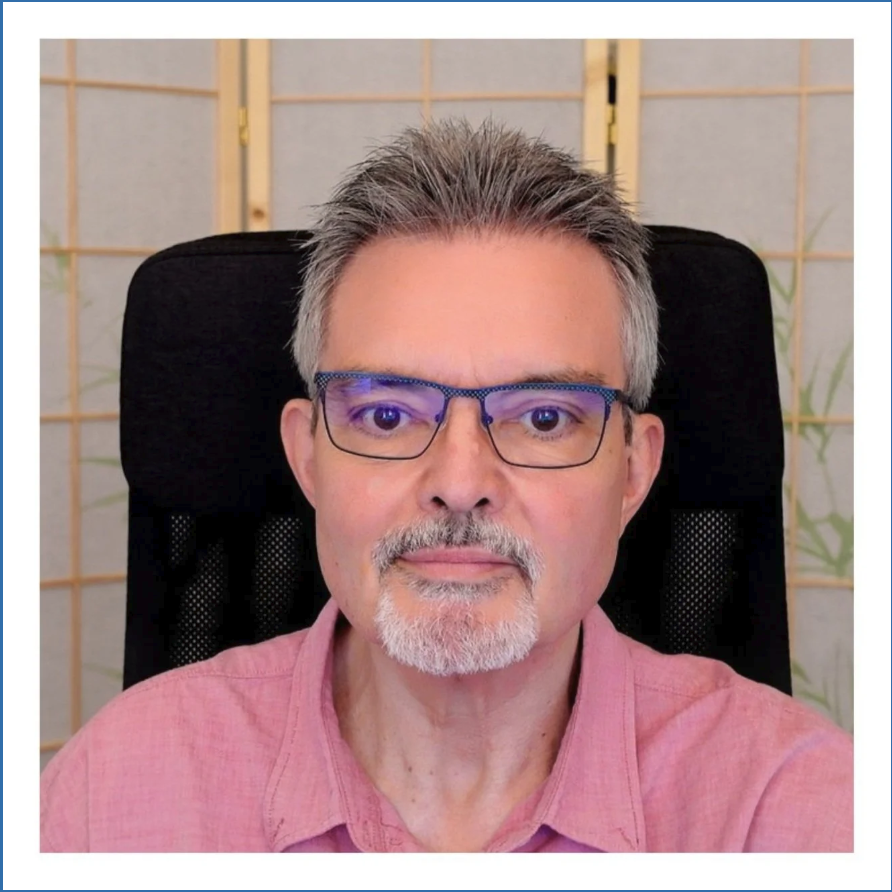
Bill Petrie
Online one-to-one work
for those who are ready to live more authentically, with clarity,
and from a deeper internal authority
M.A. Clinical Psychology (UCT)
Certificate in Cognitive Therapy (Oxford University)
Diploma in Advanced Transpersonal Psychotherapy (CCPE, London)
“There is a difference between knowing the path and walking the path.”
Many come to see me because they feel that something isn’t working in their lives.
Their lives feel inauthentic, incomplete, meaningless or misaligned in some way.
Something essential remains unseen or unresolved.
Others are facing difficult life decisions.
Lost in lists of pros and cons, tortured with overthinking,
clarity eludes them and they feel stuck.
Many are at a crossroads in their lives and need to find a new direction.
But, they don’t know which options to choose
Many are going through a difficult time.
And are needing clarity, guidance and perspective.
All need someone to walk by their side.
And, that’s where I come in.
How I Work:
My approach integrates psychology, meditation, mindfulness, spiritual awareness and relational presence.
In this holistic approach, we slow things down together so that what has been unnoticed, avoided or unconscious becomes clearly visible.
In doing this, we work with what is actually happening — in your mind, in your body, in your relationships and in your moment-to-moment experience.
In doing this, we discover what is authentic and true for you.
And, given this, real change becomes possible — real change in a real life.
Areas of Focus
Transformational Coaching & Mentoring
The potential in this work is very broad, but the focus depends on the needs of each client.
Body-Based Intuition & Body-Based Decision-Making
Exploring the invaluable uses of one’s ‘gut feeling’ in decision-making and guidance in every aspect of life.
Meditation, Mindfulness and Presence
Teaching and exploring the practices and enormous benefits of these skills one-to-one in a secular way.
(for both beginners and advanced practitioners).
Discovering and exploring your own spiritual path.
Body-Based Intuition & Body-Based Decision-Making
A central strand of my work is helping people develop body-based intuition — the capacity to sense what is authentic, wise and true for you through the felt sense of the body.
This not only brings much greater self-awareness, but it also markedly improves decision-making - decision-making that doesn’t rely on thought or analysis alone.
The felt sense that facilitates all of this is often crudely called a ‘gut feeling.’
Although we call it a ‘gut feeling,’ these sensations may occur in any part of the body. The chest is another common point of focus.
The felt sense sensations are often subtle and so are often ignored or not felt at all.
Critically, the felt sense sensations need to be separated from impulses and emotions such as fear and desire.
This requires considerable skill and this capacity can often only be learned through careful one-to-one work.
When the capacity to work with the felt sense is developed, it offers a quiet, reliable internal guide in these and many other situations:
significant life or career decisions
relationship choices and boundaries
questions of timing and readiness
chronic over-thinking or hesitation
a sense of being conflicted
Working with Body-Based Intuition is Not Coaching in the Usual Sense.
Although you will find body-based intuition invaluable, this work is not focused on optimisation, performance, or becoming a better version of yourself.
It is about maturation — learning to live from a deeper centre of gravity, where thinking, feeling, body, and awareness are integrated into a functioning whole.
This work essentially represents a shift:
from external authority to one’s own internal authority
from “What should I do?” to “What is authentic, wise and true for me in this situation?”
Meditation, Mindfulness and Presence
We are very fortunate that meditation, mindfulness and presence have been so widely recognised both by science and millions of individuals as being of enormous value.
In this work, meditation, mindfulness and presence are treated from a secular point of view - no dogma, no religion, just scientifically validated practices and lived experience.
Those who are drawn rather to a spiritual approach should click here.
Who this work is for
Those who prefer a secular approach
Those who want to develop a regular meditation practice
Those who want to deepen their meditation practice
And those who want to take their practice into their everyday life (mindfulness and presence)
Your Unique Spiritual Path
For those who are drawn to this particular work, and not everyone is, this work enables the recognition and exploration of something vastly greater than our individual selves.
What This Work Supports
While recognising that each person’s spiritual path is unique, in this work we draw on the wisdom traditions of the world in order to help you to explore and to deepen your own spiritual life.
Through this work, you will not only develop greater presence and self-compassion, but you will also find far greater access to kindness, compassion, gratitude, joy and wisdom.
And, with the deepening of a spiritual life comes much greater resilience and inner peace.
What this work is not
This work is not based on dogma.
Nor does it aim to help people bypass their personal issues.
The work is deeply grounded, realistic and practical, and it focuses on the actual lived experience of a greater reality -whatever you realise that to be for you.
About Bill
I bring decades of experience in psychology, psychotherapy, and contemplative practice to this work.
Because of the breadth and depth of my experience and training, my work often goes beyond the bounds of traditional coaching or psychotherapy to encompass a much wider view.
Please bear in mind that my focus has moved away from simply fixing or managing problems, and towards supporting people to live with greater presence, honesty, authenticity and inner coherence.
I now work exclusively online, offering depth-oriented, one-to-one conversations for those who are ready for this kind of engagement.
Outside of the bounds of my professional life, I am very fortunate to be living with my beloved wife, the artist, Trish Mitchell, in the endless beauty of the English Cotswolds. Photography is my creative joy.
Bill’s Qualifications
All the training has been part of my search for the models, tools and processes that have enabled me to develop the Deep Insights Approach.
-
A comprehensive professional training in clinical psychology that included in-depth instruction in counselling and psychotherapy. My Master’s thesis was on an understanding of wilderness experience from a Jungian point of view.
-
A two-year post-graduate part-time training in a form of psychotherapy that integrates a spiritual perspective with more traditional psychotherapy.
-
An intensive year-long part-time training in Cognitive Behavioural Therapy – a practical form of psychotherapy that is particularly useful in dealing with anxiety issues and depression.
-
A year-long part-time training in psychotherapy supervision.
-
This is the two-part practitioner training in a form of psychotherapy (EMDR) that is extremely effective in putting any traumatic memory to rest. Most types of psychological difficulty are caused or precipitated by a trauma of some sort. Both of these trainings were with the originator of EMDR – Francine Shapiro.
-
Both EFT and Matrix Reimprinting use a combination of eastern medicine and western psychology to treat traumatic memories. Matrix Reimprinting is an extremely effective development of EFT. I was fortunate to train in both methods with the originator of Matrix Reimprinting – Karl Dawson.
-
A vision quest is psychological and spiritual process during which people fast in a natural environment after careful preparation and under proper supervision. The vision quest is a very powerful ritual that is frequently life-transforming. I was very lucky to be trained in the USA by the late Steven Foster and Meredith Little, exceptional teachers in this tradition. Since then, I have run many vision quests both in Africa and in the UK.
-
This arduous training as a traditional healer took more than five years to complete. Although I no longer practice as an African healer, I have integrated very valuable elements from this training into my work.
-
This was my first graduate qualification and was followed by employment in Microbiology, Medical Biochemistry and Industrial Chemistry laboratories. I later returned to university to study psychology. I am very grateful for this training because it affords me a deep understanding of the scientific perspective - its great value and its limitations.
Bill’s Professional Journey
The most important person in our work is you.
Bearing that in mind, I describe something of my professional journey here in order to give you some idea of the breadth and depth of possibilities in our work.
More than forty years ago, I began an intensive search to find answers to the essential question:
‘How can we live our lives well?’
That search led me to the work of the Swiss psychiatrist Carl Jung. His understanding transformed my experience of life and ignited in me a fierce passion to help others.
I left my job as a medical biochemist and began the long training to be a clinical psychologist.
Many further answers emerged, my life improved significantly, and I went on to establish busy private practices in Cape Town and later in Harley Street, London
Clinical psychology certainly had much to offer but something still felt incomplete. I wanted to deepen my understanding of the treatment of emotional and spiritual difficulties and so I did this by training in several specialised forms of psychotherapy:
Transpersonal Psychotherapy (a therapeutic approach that integrates a spiritual perspective)
Cognitive Behavioral Therapy (CBT)
EMDR (Eye Movement Desensitization and Reprocessing)
Emotional Freedom Techniques (EFT)
Matrix Reimprinting
Many more gems were unearthed but I knew that the search was far from over.
Part of the problem was that clinical psychology and most forms of psychotherapy focus on mental illness.
I wanted a much broader focus that focused on a sense of well-being.
Coaching was one of those professions that had a more positive approach, and it became a valuable part of my work.
But, even with all of this, I still felt that my understanding was far from complete, and so my search for a deeper understanding continued.
Precipitated by a retreat with Ram Dass and teachings by the Dalai Lama in London, I began to immerse myself in both Western and Eastern spiritual traditions. I devoured work by Jack Kornfield, Joseph Goldstein, Tara Brach, Pema Chodron, Thich Nhat Hanh, Adyashanti, Loch Kelly, Tenzin Wangyal Rinpoche, Stephan Bodian, John J. Predergast and many others. I went on retreats, including those with Atum O’Kane (a Sufi Master), Sogyal Rinpoche and Eckhart Tolle, and eventually uncovered the invaluable realisation that: within each of us lies a profound presence that is open, peaceful, loving, wise and fundamentally content.
In the late 1990s, I also developed a fascination with the therapeutic effects of nature and a curiosity about indigenous shamanic traditions. This led me to train as a Vision Quest Guide in the USA and later as a Doctor of Traditional African Medicine in Botswana, an African shamanic tradition.
Although I no longer practice in a traditional manner, these experiences enriched my approach enormously.
Through them I learned:
The profound healing power of nature
The vital importance of being mindful of the body and the felt-sense in the body
An acute awareness of subtle energy
Numerous tools to ground, balance and connect with various forms of subtle energy
How to access intuitive guidance through the body
The importance of ritual
And, much else besides
Over the last twenty years, I have continued to explore widely, including:
IFS (Internal Family Systems, a highly effective method of working with parts of our psyche)
Polyvagal Theory and its implications (understanding fight, flight, freeze, fawn, collapse responses as well as inducing a sense of well-being and safety through vagus nerve stimulation)
Attachment Theory
Radical acceptance and Self-compassion
Brain asymmetry (Iain McGilchrist)
Breathwork
Bön, the traditional spiritual and shamanic practice of Tibet
Meditation
Mindfulness
Non-dual awareness (Adyashanti, Tenzin Wangyal Rinpoche, Rupert Spira, Stephan Bodian, John J. Prendergast, and others)
And, most importantly, the practical integration of all of this in everyday life.
I am so grateful to see the work bearing fruit with the people that I work with.
My hope is that it may be of benefit to you, too.